The Liquidation Warehouse sells pallets and full truckloads of retail customer returns, overstock, shelf pulls and salvage to resellers and businesses.
A liquidation pallet is one 48 x 40 inch pallet of retail goods that a store or brand has cleared in bulk, typically returns, surplus stock or damaged items. You buy the whole lot at a single price, sort what is inside, and resell the units yourself.
How The Liquidation Warehouse describes every lot
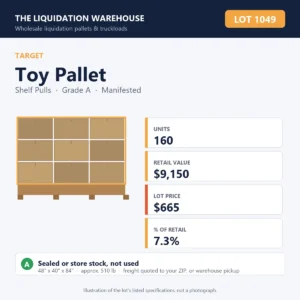
Each lot lists the source retailer, the condition, the number of units, the retail value (the sum of retail prices on the manifest), the lot price and that price as a percentage of retail. Grade A is sealed or store stock. Grade B is opened customer returns that you test before resale. Salvage with cosmetic damage is grade C, and it is sold as is.
Manifested lots have an item list that is emailed on request before you buy. Unmanifested lots are sold as is with no list at all.
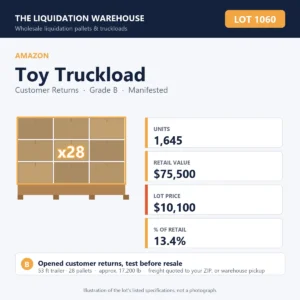


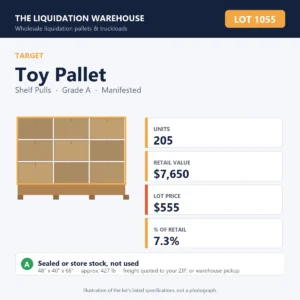
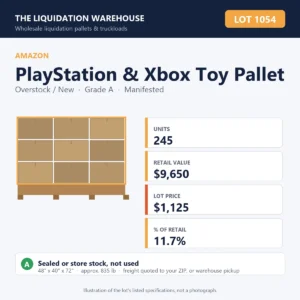


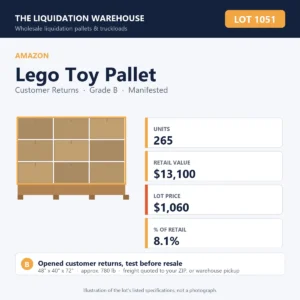

Pick liquidation pallets by retailer, category or price
If you already know which retailer’s stock you can price, start with Amazon return pallets. If you know a product type, go by category: tool pallets for drills, saws and hand tools, electronics pallets for TVs, tablets and audio gear, or clothing pallets for apparel. On a tight budget, pallets under $500 keeps the lot price low. The full pallet hub lists every retailer, category and condition.
Pallet or truckload, freight and pickup
A single pallet is the sensible size for a first order. A truckload is a 53 ft trailer holding 22 to 28 pallets, which only makes sense once you have a shop, a stall or a storage unit to fill and a dock to unload at. The price shown against a lot covers the whole lot. Delivery freight is quoted to your ZIP code, or you can pick the lot up at the warehouse. As a pallet liquidation warehouse, the store sells by the lot, not by the item.
Buyers pay sales tax unless they hold a resale certificate, so sort that out before the first order, not after.
Two guides to read before your first order
First-timers tend to lose money on lots they never saw a manifest for. The step-by-step buying guide covers reading a lot, comparing the price with retail value and planning delivery. The guide to twelve scam red flags helps you vet any seller, this one included.